


Knowledge → Gravel • Updated: season 2026
What gravel tire pressure makes sense? Table for 40–50 mm tires
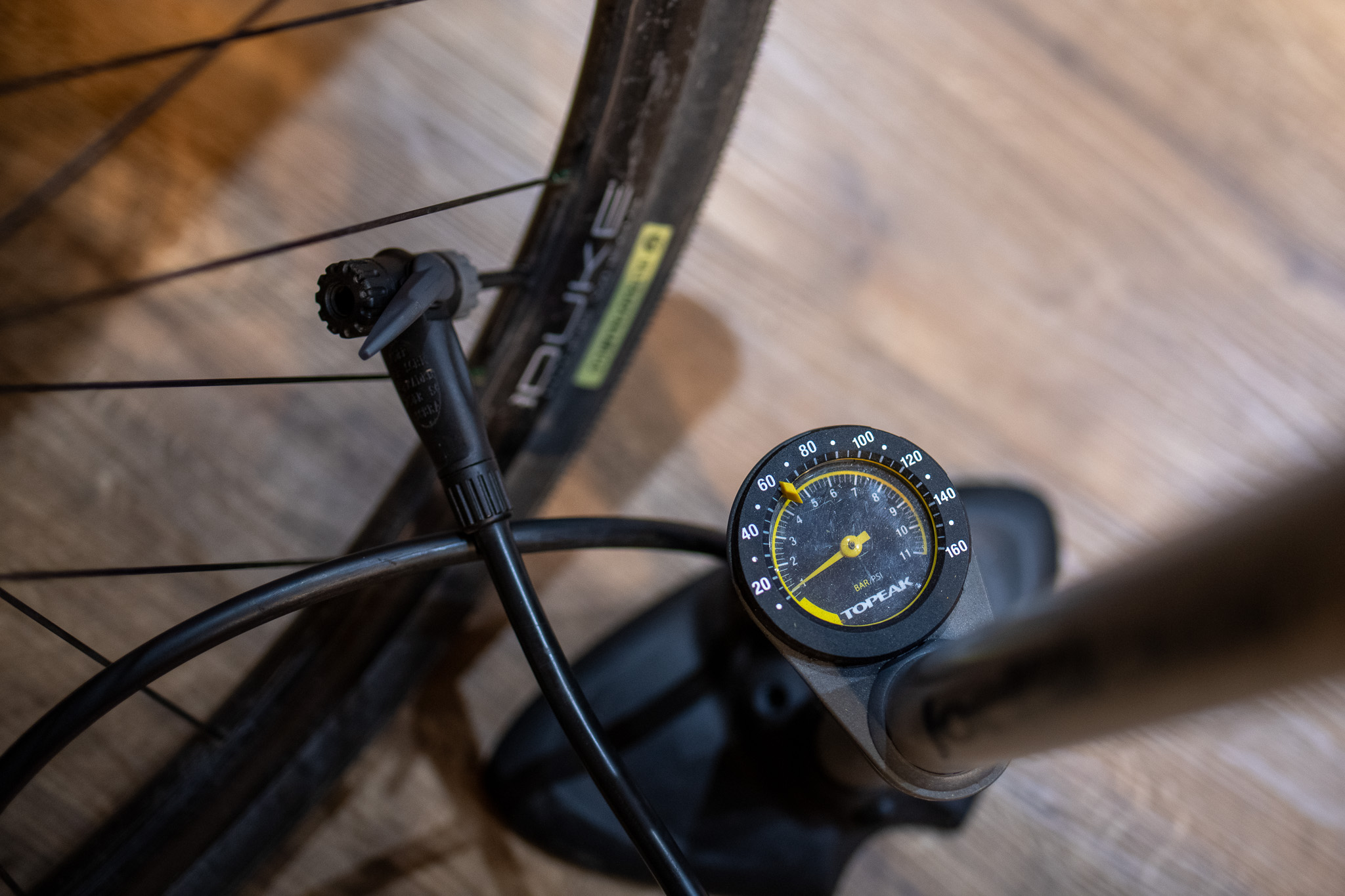
The right gravel tire pressure makes a huge difference.
Too high and you lose comfort and traction. Too low and handling can become vague, with a higher risk of bottoming out. In practice, it is not only tire width that matters, but also system weight, rim width and terrain.
Where should you start?
For most gravel bikes running 40–50 mm tires, a good starting point is around 1.8–2.8 bar, then fine-tuning based on rider weight, rim width and terrain.
The wider the tire and rim, the lower you can usually go.
Treat the table below as a starting point, not a strict rule.
Why is tire pressure so important in gravel riding?
In gravel riding, tire pressure affects comfort, control, traction and rolling resistance. In practice, properly set tires can make a bigger difference than many component upgrades.
- Pressure that is too high reduces comfort and traction on loose surfaces.
- Pressure that is too low can make the tire feel vague and increase the risk of bottoming out.
- A wider rim supports the tire better and often allows lower pressure.
- Terrain matters a lot in gravel: asphalt, hardpack, forest tracks and rocks all require slightly different settings.
Practical pressure table
The values below are a good starting point for gravel riding on a tubeless setup, in typical mixed terrain. If you run inner tubes, it usually makes sense to add around 0.2–0.4 bar.
| System weight | 40 mm tire | 45 mm tire | 50 mm tire |
|---|---|---|---|
| 60–70 kg | 2.1–2.3 bar | 1.8–2.0 bar | 1.6–1.8 bar |
| 70–80 kg | 2.3–2.5 bar | 2.0–2.2 bar | 1.8–2.0 bar |
| 80–90 kg | 2.5–2.7 bar | 2.2–2.4 bar | 2.0–2.2 bar |
| 90–100 kg | 2.7–2.9 bar | 2.4–2.6 bar | 2.2–2.4 bar |
If you ride mostly on asphalt and hard gravel, you can usually go a bit higher. If the terrain is loose, rocky or wet, slightly lower pressure often works better.
It is also worth reading our guide about gravel rim width , because rim width has a real impact on how low you can safely go.
What affects the right pressure?
- System weight — not just the rider, but also the bike, bottles and bags.
- Tire width — the wider the tire, the lower the pressure usually can be.
- Rim width — a wider rim gives the tire better support.
- Terrain — asphalt and hardpack need different settings than loose, rocky surfaces.
- Riding style — aggressive off-road riding usually requires more deliberate pressure choices.
The most common mistakes
- You inflate a gravel bike like a road bike and lose the whole point of gravel off the tarmac.
- You go too low without considering rim width and system weight.
- You use one pressure value for every tire and every terrain type.
- You do not test small changes. Sometimes 0.5 bar changes a lot.
CarbonOne recommendation
Start with a sensible value from the table, then adjust it to your terrain and riding style.
If you want to get the most out of wider gravel tires, the right rim width and a stable wheel configuration matter just as much as pressure itself.
Configuration advice without guessing
If you are not sure which tire pressure and wheel setup will work best for your gravel bike, we can recommend a solution based on your weight, terrain and tire size.
FAQ
What pressure makes sense for a 45 mm gravel tire?
For most riders, it will usually be somewhere around 2.0–2.4 bar, depending on system weight and terrain.
Can you go lower than the table suggests?
Yes, but it depends on the rim, tire, system weight and terrain. The table is a starting point, not a rigid rule.
Does rim width affect tire pressure?
Yes. A wider rim supports the tire better, which often allows you to run slightly lower pressure with better stability.