


Knowledge → Gravel • Updated for the 2026 season
How many spokes for road and gravel wheels? 24 or 28 spokes?
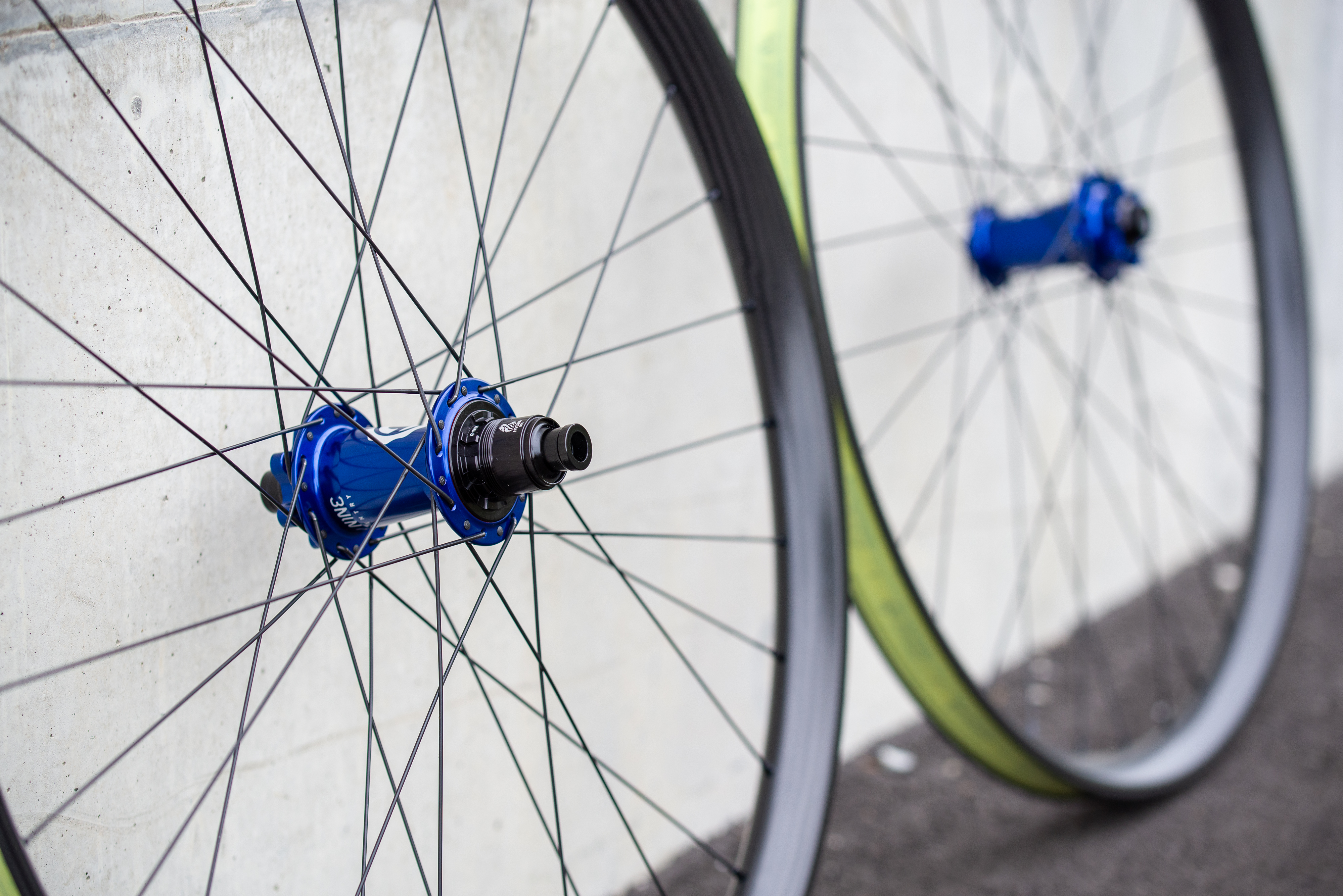
The number of spokes in a bicycle wheel really matters.
It affects load distribution, spoke tension changes while riding, fatigue resistance and the overall safety margin. So the question is not only “how much do the wheels weigh?”, but whether a 24/24 or 28/28 configuration matches the rider’s weight, riding style and intended use.
24 or 28 spokes. What should you choose?
24/24 is a safe choice for most road cyclists weighing up to around 75–80 kg.
28/28 is my recommendation for heavier riders, gravel use, bikepacking, panniers, trailers, or whenever maximum durability is the priority.
In other words: 24/24 can be a light and very good choice, but 28/28 gives a larger safety margin with only a small weight increase.
Does the number of spokes affect wheel durability?
Yes. With the same components, a higher spoke count means better load distribution, lower load on each individual spoke and a larger safety margin.
Modern carbon rims are much stiffer than they were a decade ago, but they do not change the basic mechanics of a wheel. The rim, hub, spokes, nipples, lacing pattern and spoke tension always work as one system.
- a lower spoke count means more load on each individual spoke,
- spoke tension changes while riding are greater,
- fatigue loads are higher,
- after one spoke is damaged, the wheel loses its true more quickly.
How do spokes work while riding?
Contrary to intuition, a bicycle wheel does not “stand” on the lower spokes. With every wheel rotation, some spokes increase in tension while others momentarily lose tension. This is a normal phenomenon present in every bicycle wheel.
The problem appears when the amplitude of these changes becomes too large. Over time, this leads to greater material fatigue and, in extreme cases, to spokes cracking or breaking.
With disc brakes, the situation is even more demanding, because braking adds extra torsional forces to the spokes.
Load simulation: 28 vs 24 spokes
To show the difference, I used specialist software for analysing bicycle wheel loads. The simulation takes into account hub geometry, spoke count, lacing pattern, spoke tension, system weight of the bike plus rider, and the influence of disc brakes.
Rear wheel, 28 spokes, 90 kg system weight

Rear wheel, 28 spokes, 90 kg bike + rider
In this configuration, the load is distributed across three spokes. Each of them takes around 294 N of additional load during wheel operation.
Rear wheel, 24 spokes, 90 kg system weight

Rear wheel, 24 spokes, 90 kg bike + rider
After reducing the spoke count from 28 to 24, the load is carried by only two spokes, and the value rises to around 441 N. That is an increase of nearly 50%.
This means that at the least favourable point of the wheel rotation, the spokes on the non-drive side will almost lose tension completely (644-441=203 N). As a result, with J-bend spokes, the risk of spoke breakage at the head is very high due to steel fatigue.
Rear wheel, 24 spokes, 70 kg system weight

Rear wheel, 24 spokes, 70 kg bike + rider
After reducing the system weight to 70 kg, the load values are clearly more favourable and come close to what we see with a 28h wheel at 90 kg. This shows that rider weight has a huge impact when choosing the spoke count.
How many spokes should a wheel have?
I especially recommend 28/28 if:
- you weigh more than around 80 kg,
- you ride gravel or rougher roads,
- you plan bikepacking or riding with panniers,
- you ride with a trailer,
- you expect maximum durability and a larger safety margin.
Practical selection table
| Rider weight | Road | Gravel | Comment |
|---|---|---|---|
| up to 70 kg | 24/24 | 24/24 or 28/28 | 24/24 is usually a very safe choice |
| 70–80 kg | 24/24 | 24/24 or 28/28 | For gravel, the choice depends on terrain and riding style |
| 80–90 kg | 24/24 or 28/28 | 28/28 | 28/28 provides a larger durability margin |
| above 90 kg | 28/28 | 28/28 or 32/32 | The safest configuration for durability |
Most common mistakes when choosing spoke count
- choosing wheels based only on catalogue weight,
- ignoring rider weight and total system weight,
- forgetting about panniers, bikepacking and riding with a trailer,
- copying configurations used by professional racers,
- assuming that 24h and 28h differ only in weight.
CarbonOne recommendation
At CarbonOne, I regularly build wheels in 24/24, 28/28 and 32/32 configurations. I do not treat any of them as automatically better. The key is matching the spoke count to the rider, terrain and expected durability.
For a light or medium-weight road cyclist, 24/24 is a very good choice. For gravel, higher system weight, bikepacking and riding with luggage, I most often choose 28/28.
Wheel configuration without guessing
If you are not sure whether 24/24 or 28/28 is better for you, write to me and I will help choose the right wheels for your weight, terrain, tyres and riding style.
FAQ
How many spokes should a road wheel have?
For most riders weighing up to around 75–80 kg, a 24/24 road wheel will be a safe and durable solution. For higher rider weight or very intensive use, 28/28 is worth considering.
How many spokes should a gravel wheel have?
For light gravel riding, 24/24 can be a good choice. For heavier riders, rougher terrain, bikepacking or riding with panniers, I usually recommend 28/28.
Are 24 spokes enough for a 90 kg rider?
In many cases, a well-built 24h wheel can work correctly, but at around 90 kg I usually recommend 28/28, especially for gravel or riding on rougher roads.
Do 28 spokes mean heavy wheels?
No. Compared with 24 spokes, the difference is usually only a few dozen grams, while the benefit is lower load on each spoke and a larger durability margin.
Do more spokes always mean a better wheel?
Not always. The whole system matters: rim, hub, spokes, nipples, lacing pattern, spoke tension and build quality. However, with the same components, a higher spoke count distributes loads more effectively.